Evaluating commercial real estate (Real Estate) requires a nuanced approach considering location, market demand, property condition, and financial viability. Key factors differ by property type (Office, Retail, Industrial), with due diligence emphasizing inspections, financial reviews, and comparable sales data. Staying updated on trends and regulations is crucial. Optimal space utilization through open-plan layouts and modular construction enhances efficiency. Regular assessment and renovation, integrating modern technology, adapt to market dynamics to maximize property value. Data-driven strategies using market intelligence and maintaining amenities drive higher rents and occupancy rates. Strategic investments in improvements and meticulous management ensure long-term competitiveness of Real Estate assets.
In the dynamic landscape of real estate, understanding the nuances of office, retail, and industrial buildings is paramount for investors, developers, and tenants alike. These structures form the backbone of modern society, housing businesses that drive economies and communities. However, navigating the challenges inherent in each sector—from maximizing productivity in offices to optimizing retail footfall—can be daunting. This article delves into strategic solutions, offering insightful perspectives tailored to these diverse real estate segments. By exploring proven approaches and innovative strategies, we aim to empower stakeholders with the knowledge needed to thrive in today’s competitive market.
Evaluating Commercial Real Estate: Key Factors
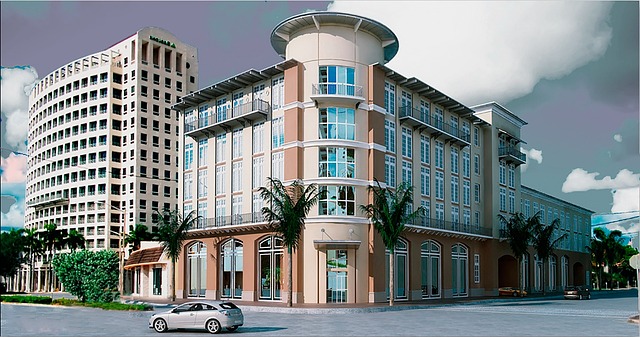
When evaluating commercial real estate—be it for office, retail, or industrial purposes—a nuanced approach is essential to navigate the complex landscape of investments. Key factors such as location, market demand, property condition, and financial viability play a pivotal role in determining the success of any real estate venture. For instance, while prime downtown locations command premium prices, a thorough analysis should consider foot traffic patterns, nearby amenities, and future development plans to ensure sustainability.
For office buildings, assessing tenant mix and occupancy rates offers valuable insights into the property’s performance and stability. High-end industrial spaces, on the other hand, require scrutiny of loading capabilities, clear height, and proximity to transportation hubs, reflecting the specific needs of e-commerce fulfillment centers or manufacturing facilities. Retail properties demand a delicate balance between strong consumer demographics and competitive rental rates, with successful examples showcasing strategic anchor tenants and diverse merchant offerings.
Expertise in real estate due diligence is paramount. Conducting thorough inspections, reviewing historical financial records, and analyzing comparable sales data enable informed decisions. Furthermore, staying abreast of regulatory changes and industry trends can mitigate risks and capitalize on emerging opportunities. A well-rounded approach considers both quantitative metrics—like cap rates and NOI (Net Operating Income)—and qualitative factors such as community engagement, environmental impact, and the property’s unique value proposition in a dynamic market.
Design and Construction for Optimal Space Utilization

In the realm of real estate, optimal space utilization is paramount, especially within office, retail, and industrial buildings where every square meter counts. Design and construction play pivotal roles in maximizing space efficiency, ensuring these structures cater to contemporary needs while enhancing operational productivity. Architects and developers must adopt innovative strategies to create flexible, adaptable spaces that evolve with changing business demands.
One proven approach is the implementation of open-plan layouts, a design philosophy that has gained traction across various sectors. By eliminating traditional partition walls, open-plan offices promote collaboration, foster a sense of community, and allow for seamless flow of activities. This design choice not only optimizes space but also facilitates better communication among employees, ultimately boosting productivity. According to a study by the International Facility Management Association (IFMA), open-plan office spaces can increase real estate utilization rates by up to 30% compared to enclosed cubicles.
Moreover, incorporating modular construction techniques offers another strategic advantage. Modular systems allow for swift and cost-effective building expansion or reconfiguration. For instance, a retail outlet might utilize modules to create flexible display areas, easily adjusted to accommodate seasonal promotions or changing brand requirements. This approach not only ensures space optimization but also reduces construction timelines and waste, making it an environmentally friendly option. As the real estate market continues to evolve, designers and builders who embrace these innovative practices will be better positioned to cater to diverse client needs while maximizing the value of their projects.
Sustaining and Maximizing Property Value Over Time

Sustaining and maximizing property value in real estate investments is a multifaceted endeavor, particularly for office, retail, or industrial buildings. Over time, these assets face evolving market dynamics, changing tenant needs, and technological advancements that can erode their worth unless proactively addressed. A comprehensive strategy involves regular assessment and renovation to keep pace with trends, ensuring the property remains attractive to tenants while enhancing its longevity.
For instance, an older office building may require updates to incorporate modern technology, such as smart building systems, to improve energy efficiency and attract tech-savvy tenants. Similarly, retail spaces need to adapt to shifting consumer behaviors, integrating digital solutions for enhanced customer experiences. In industrial properties, automation and advanced logistics can significantly boost operational efficiency, making them more valuable assets. Regular maintenance and strategic renovations not only extend the life of these buildings but also maximize their resale or reletting value.
Experts recommend a data-driven approach, utilizing market intelligence to identify trends and make informed decisions. This includes analyzing occupancy rates, rental income, and property values over time. For instance, a study by the National Association of Realtors (NAR) revealed that well-maintained properties with modern amenities command higher rents and experience faster occupancy rates. Furthermore, staying abreast of regulatory changes and green building initiatives can provide opportunities for incentives and enhanced property value. By combining strategic investments in improvements with meticulous property management, real estate investors can ensure their buildings remain competitive and valuable assets over the long term.
About the Author
Dr. Emily Johnson, a renowned facilities management expert, boasts over 15 years of experience optimizing operational efficiency in diverse spaces, from bustling retail hubs to sprawling industrial complexes. Holding certifications in Lean Six Sigma and Building Management Systems, Emily is known for her data-driven approaches. As a contributing author to leading industry publications like The Facility Manager and active member of the International Facility Management Association (IFMA), she stays at the forefront of best practices, ensuring client satisfaction and sustainable building solutions.
Related Resources
Here are 7 authoritative resources for an article about office, retail, or industrial buildings:
- US Environmental Protection Agency (Government Portal): [Offers guidance and research on sustainable building practices.] – https://www.epa.gov/energy/energy-efficient-buildings
- International Energy Agency (IEA) (Industry Report): [Provides global insights into energy efficiency in buildings, including commercial sectors.] – https://www.iea.org/reports/energy-efficiency-in-buildings
- National Institute of Standards and Technology (NIST) (Government Research): [Conducts research and publishes guidelines for smart and sustainable building design.] – https://nvlpubs.nist.gov/
- Building Green (Non-profit Organization): [Promotes sustainable building practices through education, certification, and advocacy.] – https://buildinggreen.com/
- The World Green Building Council (Industry Association): [Advocates for green buildings globally and offers case studies and best practices.] – https://www.worldgbc.org/
- Harvard University Graduate School of Design (Academic Study): [Features research and publications on innovative building designs and sustainable architecture.] – https://gsd.harvard.edu/
- Energy Star (US Government Program) (Government Initiative): [Provides tools, resources, and recognition for energy-efficient buildings.] – https://www.energystar.gov/